

isiMaworiMarathiisiMongoliyaBurmeseNepaliNorwegianisiPhashtoPersianisiPhunjabi isiSebhiyaIsiSuthu
IsiSinhala
- Slovak
- SlovenianisiSomali .
- IsiSamoa
- Self-ligating bracketsIsiShona
- Sindhi
IsiSundanese
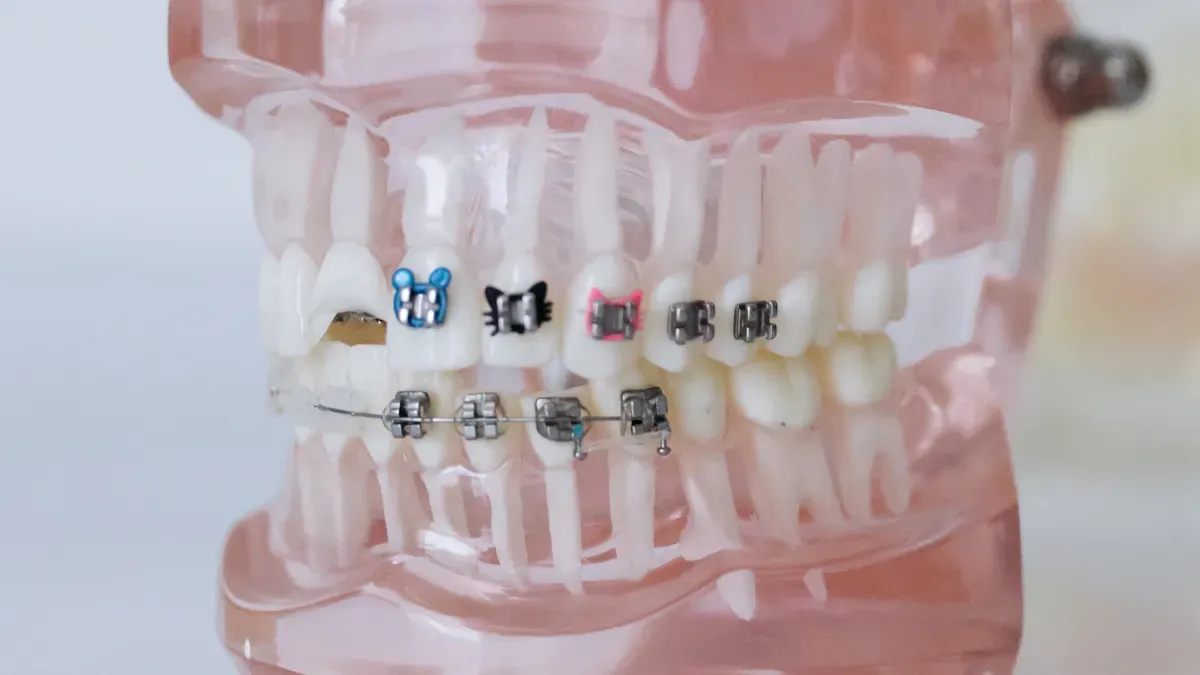
Metal Brackets
IsiTajikTamil
- isiKinyarwandaIsiThai
- isi-UkraineIsi-Urdu
- Isi-UzbekIsiVietnam
- IsiWelshisiXhosa
IsiYiddish
| Advantages | Disadvantages |
|---|---|
| isiKinyarwanda | IsiTatar |
| Oriya | |
| isiTurkmen | |
| isiUyghur |
Ceramic Brackets
Ceramic brackets are an excellent choice for patients prioritizing aesthetics. Made from aluminum oxide, these brackets blend well with tooth color. They offer superior aesthetics but come with some challenges:
- Brittleness: Ceramic brackets are more fragile than metal, leading to higher failure rates.
- Difficult debonding: Removing these brackets can be more complex, potentially causing enamel damage.
| Bracket Type | Durability | Visibility |
|---|---|---|
| Metal Brackets | Highest mechanical strength, lowest failure rates | Poor aesthetics |
| Ceramic Brackets | Good strength but more brittle, higher failure rates | Excellent aesthetics, translucent appearance |
Lingual Brackets
Lingual brackets are placed on the back of teeth, making them virtually invisible. This feature appeals to many patients who desire a discreet orthodontic option. However, they present unique challenges:
- Speech disruption: Patients may experience temporary speech issues as they adjust.
- Occlusal interferences: These brackets can affect bite alignment.
- Longer chair time: The placement process can take more time due to their positioning.
| Benefits | Challenges |
|---|---|
| Aesthetically appealing | Speech disruption |
| Protects against over-calcification | Occlusal interferences |
| Longer chair side time due to insertion issues |
Choosing the right type of bracket is essential for achieving optimal results. A comprehensive bracket slot guide can help practitioners align their choices with patient needs.
Self-Ligating Brackets
Self-ligating brackets offer a modern alternative to traditional brackets. These brackets utilize a built-in mechanism to hold the archwire in place, eliminating the need for elastic or metal ligatures. This design provides several advantages:
- Reduced friction: Self-ligating brackets create less friction between the wire and the bracket. This reduction allows for smoother tooth movement.
- Fewer appointments: Patients often require fewer visits for adjustments. The self-ligating mechanism allows for longer intervals between appointments.
- Enhanced comfort: Many patients report increased comfort due to the reduced pressure on teeth. This feature can lead to a more pleasant treatment experience.
However, self-ligating brackets also have some drawbacks. They can be more expensive than traditional brackets. Additionally, some practitioners may require extra training to use them effectively.
| Advantages | Disadvantages |
|---|---|
| Reduced friction for smoother movement | Higher cost compared to traditional brackets |
| Fewer appointments needed | Requires additional training for some practitioners |
| Increased comfort for patients |
When considering self-ligating brackets, practitioners should evaluate their patients’ specific needs. A comprehensive bracket slot guide can help orthodontists determine if these brackets align with treatment goals. Ultimately, the choice of bracket type can significantly influence the overall success of orthodontic treatment.
Key Factors to Consider in Your Bracket Slot Guide
Aesthetics
Aesthetics play a significant role in orthodontic treatment decisions. Many patients prioritize the appearance of their braces, especially adults and teenagers. The demand for aesthetically pleasing options has led to the development of various bracket types, such as ceramic and polycarbonate brackets. These options blend well with natural tooth color, enhancing patient satisfaction.
- Patients often express a strong preference for clear aligners and ceramic brackets due to their visual appeal.
- Research indicates that 92.7% of patients appreciate the invisibility of clear aligners, while 97.1% value the ease of maintaining oral hygiene with these options.
- The design and slot dimensions of brackets significantly influence aesthetic outcomes, making it essential for practitioners to consider these factors when creating a bracket slot guide.
Comfort
Comfort is another critical factor in selecting the right bracket slot. Patients’ experiences during treatment can vary based on the bracket design and slot size. For instance, low-profile designs reduce irritation and mouth sores, enhancing comfort during speaking and eating. Additionally, anti-friction coatings allow for smoother wire movement, which minimizes discomfort during adjustments.
| Feature | Impact on Patient Comfort |
|---|---|
| Low-profile designs | Reduces irritation and enhances comfort in daily activities. |
| Anti-friction coatings | Allows smoother wire movement, reducing discomfort. |
| Customizable force levels | Provides tailored treatment, improving comfort and efficiency. |
Research shows that different bracket slot sizes also affect comfort levels. For example, smaller slots (0.018-inch) may provide better torque control but can lead to higher frictional forces. In contrast, larger slots (0.022-inch) offer more wire options but may result in less torque control. Understanding these dynamics is crucial for orthodontists aiming to optimize patient comfort throughout treatment.
Cost
Cost is a significant consideration for both patients and orthodontic practices. The average cost of orthodontic treatment can vary widely based on the type of braces selected. Traditional metal braces typically range from $3,000 to $6,000, while self-ligating braces can cost between $3,500 and $6,500. This price difference is often attributed to the advanced technology and materials used in self-ligating systems.
| Braces Type | Average Cost |
|---|---|
| Traditional Metal | $3,000-$6,000 |
| Self-Ligating | $3,500-$6,500 |
Insurance coverage can also impact the affordability of different bracket options. Some dental plans may cover a portion of the costs associated with orthodontic treatment, influencing patients’ choices. Practitioners should be aware of these financial considerations when discussing treatment options with patients.
Hygiene
Maintaining proper oral hygiene during orthodontic treatment is essential for preventing complications such as plaque accumulation and gingivitis. The choice of bracket type can significantly influence the ease of maintaining oral hygiene. Different bracket designs present unique challenges and benefits in this regard.
Self-ligating brackets (SLBs) stand out for their ability to enhance oral hygiene. Research indicates that SLBs are associated with reduced plaque retention compared to conventional brackets (CBs). This reduction can lead to improved periodontal health. A study by Wang et al. found that patients using SLBs experienced less inflammation, suggesting better overall dental health outcomes. Furthermore, Pellegrini et al. conducted a randomized controlled trial that demonstrated increased plaque accumulation on elastomeric ligatures compared to SLBs. This evidence highlights the potential of SLBs to facilitate better oral hygiene during treatment.
In contrast, traditional multibracket appliances often present challenges for maintaining cleanliness. The irregular surfaces of these brackets can hinder effective cleaning, leading to increased plaque accumulation. The following table summarizes findings related to plaque accumulation and gingivitis associated with different bracket slot designs:
| Findings | Description |
|---|---|
| Plaque Accumulation | Increased in patients with multibracket appliances due to irregular surfaces that hinder cleaning. |
| Gingivitis | Observed in patients with multibracket appliances, linked to plaque accumulation in specific areas. |
| Microbial Flora | Altered in patients with multibracket appliances, contributing to plaque accumulation. |
Periodontal pathogens and cariogenic bacteria can form biofilms on brackets within 24 hours. This rapid biofilm formation underscores the need for aggressive oral hygiene from the start of treatment. Patients should be educated on effective brushing techniques and the importance of regular dental check-ups to mitigate these risks.
Practical Tips for Selection
Assessing Patient Needs
Understanding patient needs is essential for selecting the right bracket slot. Each patient presents unique circumstances that influence their treatment. Practitioners should consider the following factors:
- Aesthetic Preferences: Many patients prioritize the appearance of their braces. Discussing options like ceramic or lingual brackets can help meet these needs.
- Comfort Levels: Some patients may have sensitivities that require low-profile designs or self-ligating brackets to enhance comfort.
- Lifestyle Considerations: Active lifestyles may necessitate more durable bracket options to withstand physical activities.
Utilizing advanced technology can further enhance the customization of treatment. For instance, orthodontists can use tools like ODB for precise positioning of teeth, allowing adjustments in aesthetics and occlusal planes. Additionally, the flexibility of Approver Software enables practitioners to modify torques mid-treatment based on tooth movement, ensuring individualized care.
Consulting with Orthodontic Professionals
Collaboration among orthodontic professionals is vital for effective bracket slot selection. Engaging in discussions with colleagues can provide insights into complex cases. Key considerations include:
- Material Selection: Choosing the right orthodontic bracket materials and prescriptions is crucial for treatment mechanics.
- Slot Dimensions: Understanding how slot dimensions affect treatment outcomes can guide practitioners in making informed decisions.
- Biomechanics: Orthodontic biomechanics play a significant role, especially in complex cases. Precise control of tooth movements is necessary for atypical scenarios.
Practitioners should also analyze optimal orthodontic forces to achieve desired tooth movements. Effective treatment mechanics require a thorough understanding of arch alignment, bite opening, and space closure. This knowledge helps identify the necessary forces and moments for successful outcomes.
Evaluating Treatment Goals
Evaluating treatment goals is essential for aligning bracket slot choices with patient expectations. The ABO Objective Grading System (OGS) serves as a critical tool for assessing clinical outcomes. This system evaluates occlusion and soft tissue relationships, providing a comprehensive view of treatment effectiveness.
Practitioners should consider the following when evaluating treatment goals:
- Desired Outcomes: Clearly define what the patient hopes to achieve through treatment. This may include aesthetic improvements or functional corrections.
- Monitoring Progress: Regularly assess treatment progress against established goals. Adjustments may be necessary based on patient response.
- Patient Education: Educate patients about the implications of different bracket slots on their treatment journey. This transparency fosters trust and enhances satisfaction.
By integrating these practical tips into their practice, orthodontists can create a more effective bracket slot guide that aligns with individual patient needs and treatment objectives.
Common Mistakes to Avoid When Choosing a Bracket Slot
Overlooking Patient Preferences
Ignoring patient preferences can lead to dissatisfaction and non-compliance during treatment. Patients often have specific desires regarding the aesthetics and comfort of their braces. When orthodontists fail to consider these preferences, they risk longer treatment durations and lower satisfaction rates. Research indicates that understanding patient attitudes significantly influences treatment outcomes.
Key Points:
- Patient preferences shape treatment adherence.
- Communication about options enhances satisfaction.
- Non-compliance can extend treatment time.
| Evidence Type | Description |
|---|---|
| Patient Preferences | Knowledge, attitudes, and practices of patients significantly influence treatment outcomes. |
| Treatment Experience | Overall experience during treatment, including communication and expectation management, is crucial for satisfaction. |
| Compliance Issues | Non-compliance can lead to longer treatment durations and potential failures. |
Ignoring Treatment Complexity
Orthodontists must recognize the complexity of each case when selecting bracket slots. Complex malocclusions require careful planning and execution. Neglecting this complexity can lead to longer treatment times and poorer outcomes. Studies show that cases with unaddressed complexities often receive lower scores on treatment quality assessments.
The consequences of ignoring treatment complexity can be severe. Practitioners may find themselves needing to make adjustments mid-treatment, which can frustrate both the clinician and the patient.
Focusing Solely on Cost
While cost is an important factor, prioritizing it above all else can compromise treatment quality. Many practitioners may lean towards conventional brackets to save money, overlooking the long-term benefits of self-ligating brackets. These advanced options often provide improved treatment efficiency and patient comfort.
A patient-driven treatment method is essential for achieving the best possible results. Customizing treatment to meet individual patient needs enhances efficiency and improves overall dental health.
Consider This:
- Long-term stability of treatment outcomes is often compromised when cost is the sole consideration.
- Customized approaches are critical for individual patient needs.
Choosing the right bracket slot is vital for successful orthodontic treatment. It directly impacts patient comfort, treatment efficiency, and overall satisfaction. Practitioners should consider individual patient needs and treatment goals to achieve optimal results. Recent research highlights several key takeaways regarding bracket selection:
| Key Takeaway | Description |
|---|---|
| Enhanced Comfort | Recent advances in orthodontic brackets enhance patient comfort and practitioner convenience. |
| Material Evolution | Brackets have evolved from metal and ceramics to include plastics and self-ligating designs. |
| Informed Treatment Planning | Understanding bracket innovations aids practitioners in making informed treatment decisions. |
By prioritizing these factors, orthodontists can ensure a more effective and satisfying treatment experience for their patients.
FAQ
What is the difference between 0.018 and 0.022 bracket slots?
The 0.018 slot offers better torque control, while the 0.022 slot allows for more wire options. Practitioners choose based on treatment goals and patient needs.
How do self-ligating brackets improve treatment?
Self-ligating brackets reduce friction and require fewer adjustments. This design enhances patient comfort and can lead to shorter treatment times.
Are ceramic brackets as durable as metal brackets?
Ceramic brackets are less durable than metal brackets. They can be more brittle, leading to higher failure rates, especially in active patients.
How can patients maintain oral hygiene with braces?
Patients should brush after every meal and use interdental brushes or floss threaders. Regular dental check-ups also help maintain oral health during treatment.
What factors influence the cost of orthodontic treatment?
The cost depends on bracket type, treatment complexity, and duration. Insurance coverage can also affect overall expenses, making it essential to discuss options with patients.
Post time: Mar-13-2026